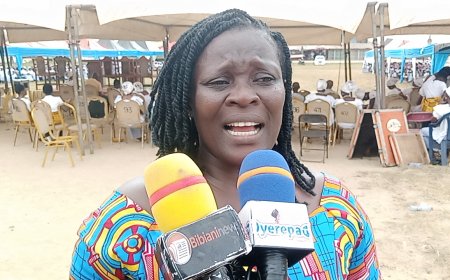
Reducing Maternal Mortality Requires Collective Responsibility — Dr. Paulina Cleara Appiah
Reducing Maternal Mortality Requires Collective Responsibility — Dr. Paulina Cleara Appiah
 Hamza Mohammed
Reducing Maternal Mortality Requires Collective Responsibility — Dr. Paulina Cleara Appiah
The Western North Regional Health Director, Dr. Paulina Cleara Appiah, has called for collective efforts from healthcare professionals, communities, traditional leaders and institutions to reduce maternal mortality in the Western North Region.
According to her, the responsibility of preventing maternal deaths should not rest solely on health professionals, but requires the active involvement and commitment of all stakeholders within the region.
Dr. Appiah made the call during the 2026 Mid-Year Performance Review of the Western North Regional Health Directorate, where the Directorate assessed the region’s health performance for the first half of the year and highlighted key challenges affecting healthcare delivery.
She stressed that reducing maternal mortality requires a coordinated approach involving health facilities, families, community leaders, traditional authorities and other relevant institutions.
The Regional Health Director noted that timely access to appropriate healthcare is critical in preventing deaths related to pregnancy and childbirth. She therefore urged communities to support pregnant women in seeking antenatal care, skilled delivery services and immediate medical attention whenever complications arise.
She also called on traditional and community leaders to intensify public education on maternal health and encourage families to take pregnancy-related complications seriously.
Her comments come at a time when the region has recorded 16 maternal deaths during the first half of 2026, a situation that has raised concerns among health authorities.
According to the data presented at the review, Sefwi Wiawso recorded five maternal deaths, while Bibiani-Anhwiaso-Bekwai and Suaman recorded three deaths each. The remaining cases were recorded in other districts across the region.
Dr. Appiah disclosed that haemorrhage accounted for 31.2 percent of the recorded maternal deaths, making it one of the leading causes of maternal mortality in the region. Hypertensive disorders and other medical complications were also identified as significant contributors.
The review further revealed that delays in receiving appropriate and adequate care were associated with a significant number of the deaths.
Dr. Appiah explained that 14 of the 16 maternal deaths involved delays in clinical decision-making, inadequate intervention or delayed escalation of care, highlighting the need for health facilities to strengthen emergency response and referral systems.
She therefore urged health workers to remain vigilant and ensure that pregnant women with complications receive prompt assessment, intervention and, where necessary, referral to facilities with the required capacity.
Beyond the health sector, she encouraged families and communities to play their part by ensuring that pregnant women are supported throughout pregnancy and are not delayed from seeking medical attention because of financial, social or cultural considerations.
The Regional Health Director further emphasised the importance of strengthening collaboration between health institutions and community stakeholders to identify the causes of maternal deaths and develop practical interventions to address them.
She called on traditional leaders, religious leaders, community leaders, civil society organisations and other institutions to join the campaign to protect the lives of mothers and improve maternal health outcomes across Western North.
Dr. Appiah stressed that every maternal death has an impact not only on the woman but also on her family, children and the wider community.
She therefore appealed for sustained commitment from all stakeholders to address preventable factors, improve access to quality maternal healthcare and ensure that pregnant women receive timely and appropriate care.
“Reducing maternal mortality cannot be achieved by health professionals alone; it requires collective responsibility from communities and institutions,” Dr. Appiah emphasised.
She expressed the hope that stronger collaboration, increased awareness and improved healthcare interventions would help reverse the trend and contribute to a significant reduction in maternal deaths across the Western North Region.
Source:Bibianinews.com